
CMS - Playbook (Direct Training Contract)
Do you want a TC at CMS?
Here’s the research you need to impress!
This Playbook (2,743 words) covers:
🛰️ Pushing for Tech growth
⚡ How battery projects bring CMS repeat business
🚆 Financing 29 new TransPennine trains
🤖 AI bonuses
🙋 How CMS stands out from competitors
Plus, where CMS stands out and how to use these insights in your application and interview.
⏰ Deadline: 22 November 2026 (Bristol, Liverpool, London, Manchester and Sheffield)
Why tech is a growth area for CMS
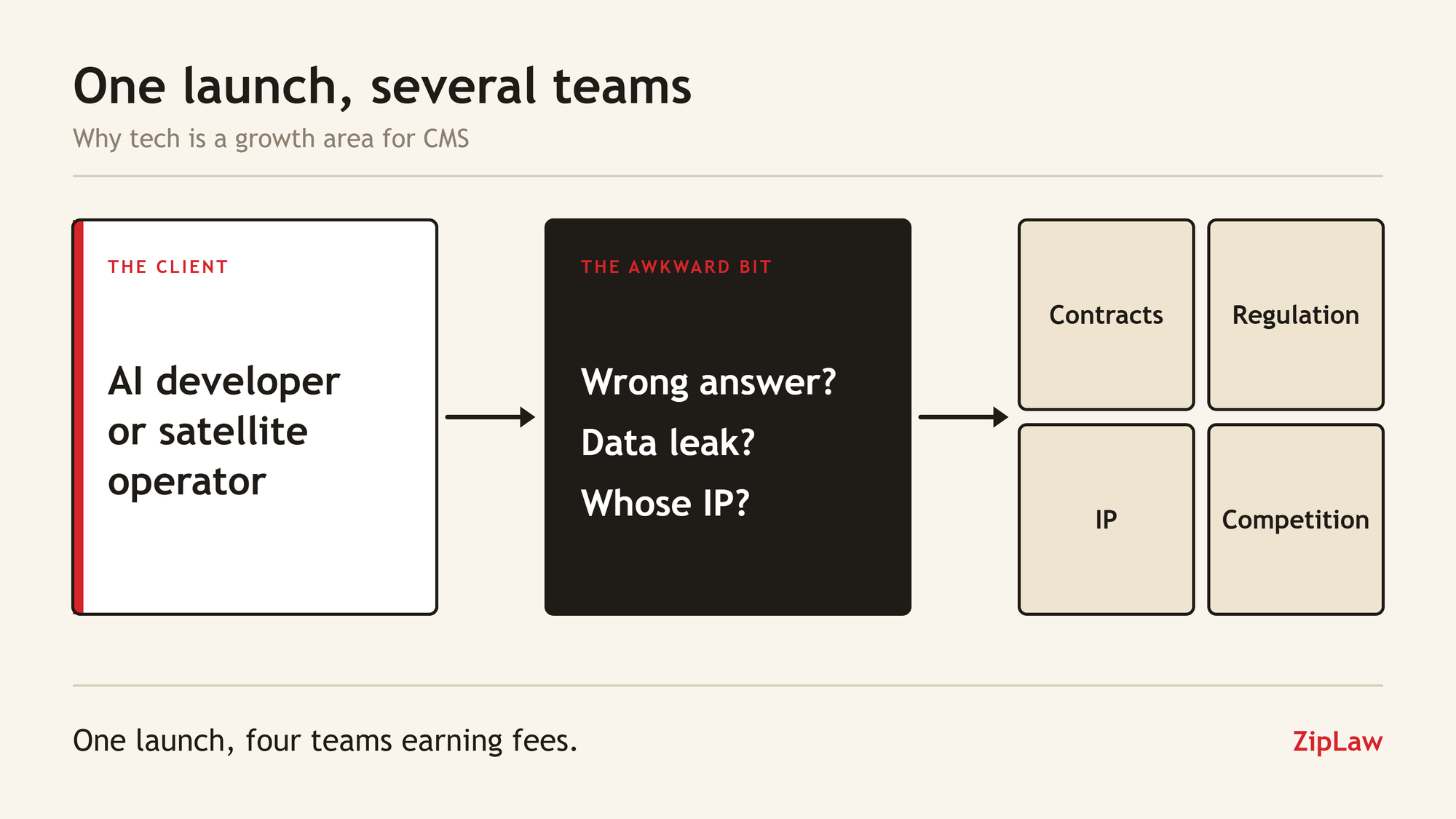
An AI developer has built its product. Customers are interested. Now comes the awkward bit: what happens if it gives the wrong answer, leaks customer data or uses someone else’s intellectual property?
These questions need resolving before customers sign up and they are creating a lot of work for firms like CMS.
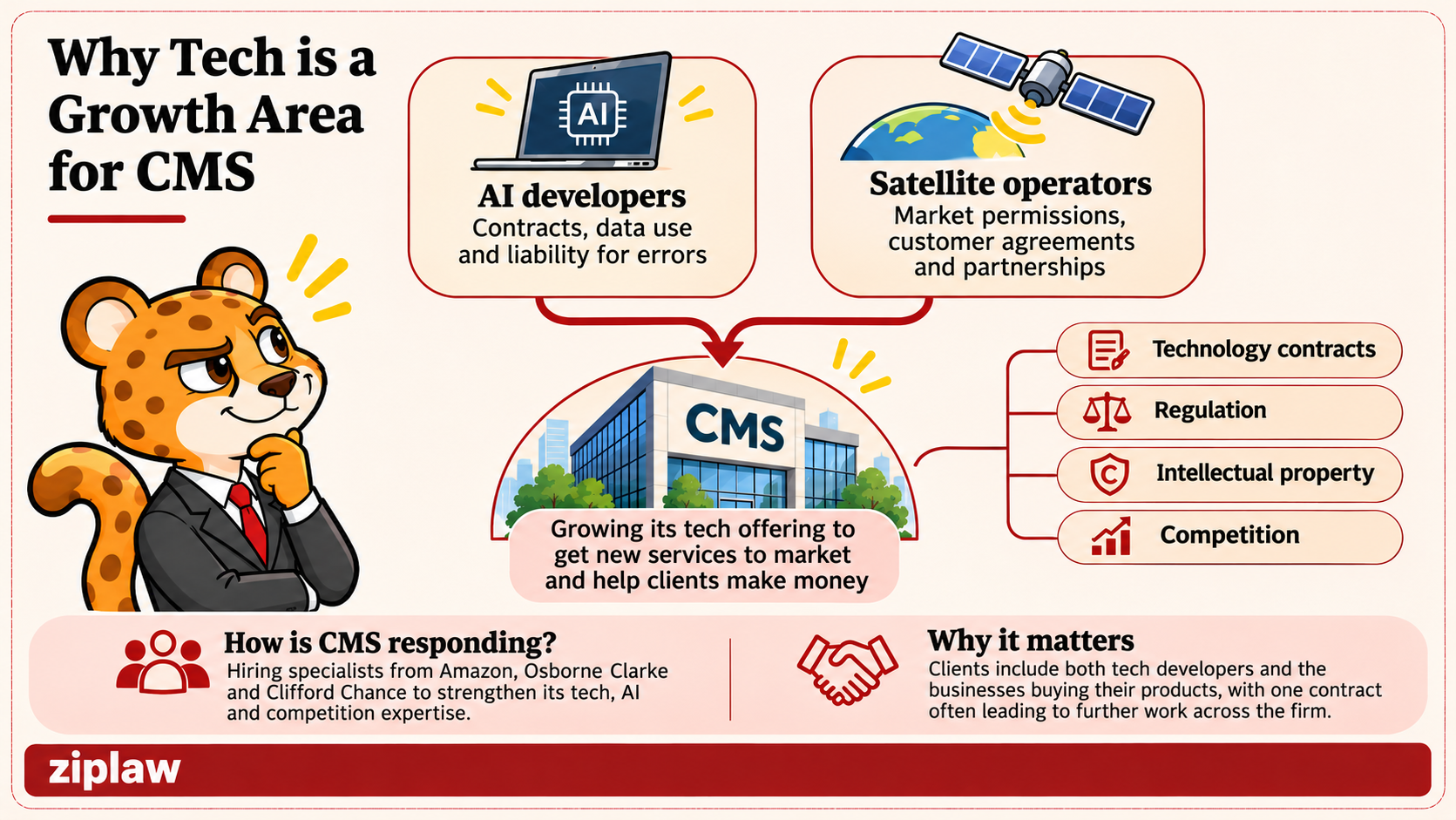
CMS is growing its tech offering to advise businesses on getting new services to market and making money from them. For example:
- 🤖 AI developers need contracts covering how customers can use their software, what happens to their data and who takes responsibility for errors.
- 🛰️ Satellite operators need permission to provide services in each market, alongside agreements with customers and commercial partners.
Plus: A single launch can involve technology contracts, regulation, intellectual property and competition advice. For CMS, that means several teams could earn fees from the same project.
What is driving the opportunity?
New technology gives businesses more to sell, while regulatory changes can make those sales possible. For example, Ofcom proposed an expansion of radio frequencies for satellite connections on UK-registered aircraft and ships. This could improve onboard broadband and create opportunities for operators to win airline contracts.
But before signing, operators need to know what service they can legally promise, when it can launch and who pays if permissions are delayed. CMS can help negotiate agreements that account for those risks.
How is CMS responding?
CMS has recruited specialists across several parts of this work:
- Prash Mehta joined from Amazon in October, bringing experience of the planned rollout of its satellite broadband network.
- John Buyers arrived from Osborne Clarke in August, adding AI and technology contracting expertise.
- Aniko Adam joined from Clifford Chance that month, strengthening advice on digital markets, competition investigations and merger control.
Those additions give CMS more expertise to support a technology business through product launches, customer negotiations and expansion.
🤔 Why does this matter to CMS?
The customers need lawyers too
You do not need to build AI to need advice on it. A bank buying an AI system needs to know whether the supplier can use customer information, who is responsible for mistakes and whether it can switch providers without disrupting its operations. CMS can combine technology advice with its knowledge of the customer’s industry: a bank, retailer and energy company might buy the same software but need different protections because they use it differently and face different rules. That gives CMS a potential client base spanning both technology developers and the businesses buying their products.
One contract can lead to more work
A client might first hire CMS to negotiate a software agreement. As it grows, it could need advice on overseas licences, an acquisition or a competition investigation. Lawyers who already understand the product, its contracts and how the business makes money have a useful head start when competing for those instructions. For CMS, the opportunity is to become a regular adviser as the client’s legal needs grow, bringing work to other teams across the firm.
⭐ How to use this in your application
Join ZipLaw+ to continue reading