Memo: Running on Empty

Good morning! Here's what we've got for you today:
🪨 Europe scrambles for rare earths
🏛️ Italy eyes its gold reserves
🇫🇷 Macron warns on China dependence
🇨🇳 Starmer takes cautious China stance
Running on Empty

What’s going on here?
Despite a rare earths “truce” between the US and China, Beijing’s export curbs are leaving Europe’s defence industry dangerously short of critical materials while US firms snap up the remaining global supply.
What does this mean?
Rare earths like terbium and neodymium might not sound glamorous (and are impossible to pronounce), but they’re essential for everything from jet engines to missile guidance systems. With China banning exports to companies linked to weapons manufacturing, the world’s supply has tightened, and Europe is being outpaced.
There's a clear split. US defence giants, armed with cash and coordination, are locking down stock through upstream deals and long-term government backing. The Pentagon even guarantees prices for MP Materials, its domestic producer. Europe, meanwhile, is bogged down by bureaucracy, fragmented procurement, and a lack of strategy. Traders say American buyers move in “days,” while Europeans take “weeks.”
The EU’s Critical Raw Materials Act and Germany’s €1bn KfW fund are designed to cut dependence on China by boosting local mining, refining, and partnerships abroad, but these projects take years to materialise. In the meantime, Europe’s fragmented efforts leave smaller defence firms exposed to shortages, while US companies, backed by government funding and faster deals, consolidate their control over the global rare earth supply chain.
How Does This Impact Law Firms?
1. International Trade & Regulatory:
China’s tightened export controls and the scramble for non-Chinese supplies will force defence companies and raw materials traders to navigate a thicket of trade, export-control and sanctions rules. Lawyers will be called in to interpret China’s defence-related export bans, advise on EU/UK import licensing, and structure compliant supply chains under the Critical Raw Materials Act and the upcoming RESourceEU framework. A lawyer advising a German defence contractor might prepare a trade compliance audit, mapping every stage of its rare-earths procurement chain to ensure no post-April-2025 restricted Chinese material is inadvertently entering its products — and drafting internal policies to mitigate enforcement risk.
2. Corporate, Projects & Investment:
Europe’s urgent push to secure alternative supply, including mining investments in Canada, long-term supply deals, and joint ventures for refining capacity, opens a wave of transactional work. Defence groups and governments will pursue strategic partnerships, equity stakes, and forward-purchase agreements to stabilise access to critical minerals. A lawyer advising on the Germany–Canada submarine-linked minerals partnership might negotiate a cross-border investment and offtake agreement, setting out funding terms, guarantees, governance rights, and environmental obligations tied to the development of Canadian rare-earth mines and processing facilities.
3. Environmental & Planning:
Rebuilding Europe’s refining capacity is a regulatory minefield. Rare-earths processing produces hazardous waste, meaning companies face strict permitting, environmental impact assessments and ongoing compliance. Firms looking to reopen or expand processing sites will need deep environmental support. An environmental lawyer supporting a French rare-earth processor may draft a comprehensive Environmental Impact Assessment (EIA) addressing waste management, soil and water contamination risks, and long-term remediation plans required under EU environmental directives — all to secure the permits needed to restart domestic refining.
News Roundup
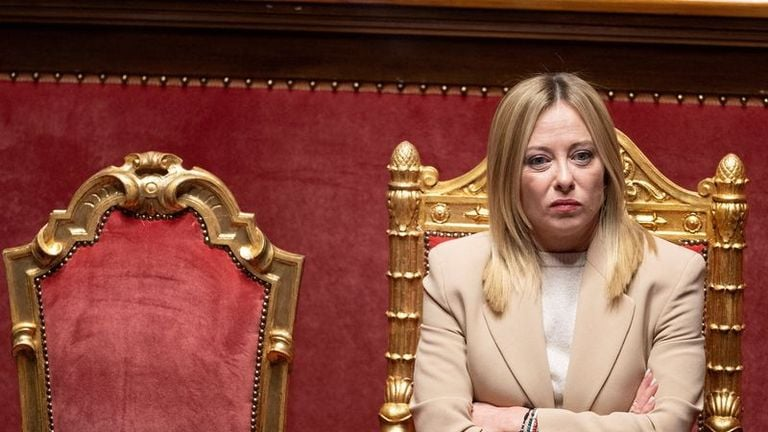
🏛️ In Italy, lawmakers from Giorgia Meloni’s coalition want to declare the nation’s gold reserves, the third-largest in the world — property of “the Italian people.” Critics fear that’s code for a sell-off, with Rome eyeing the treasure to plug fiscal gaps. The same week, prosecutors alleged a plot involving billionaires and a bank boss to seize control of insurer Generali.
🇬🇧 UK pension funds are cutting exposure to US stocks over fears the market’s become too dependent on a few AI-driven tech giants. Schemes managing £200bn+ are shifting money into other regions or hedging against a correction. The Nasdaq is up 20% this year, powered by the “Magnificent Seven” i.e. Nvidia, Meta, Alphabet and co., but the rally’s looking top-heavy. If the bubble bursts, British retirees could be the ones feeling the pain.
🏦 The European Central Bank has refused to backstop the EU’s planned €140bn Ukraine loan, saying it would break its legal mandate. The decision stalls an EU plan to raise cash using frozen Russian assets, a move meant to fund reconstruction. Meanwhile, Zara-branded goods are mysteriously reappearing in Russia, despite parent firm Inditex claiming it exited the market.
🇫🇷 Emmanuel Macron heads to Beijing this week, warning Europe not to become industrially “dependent on China.” But EU companies keep building local factories anyway, arguing it’s the only way to stay competitive with Chinese rivals. The debate over de-risking vs. decoupling continues. Europe wants autonomy, but not at the cost of market access.
💶 Swedish private-equity giant EQT is weighing higher fees for big investors as it courts rich individuals for fresh cash. With money now pouring in from family offices and high-net-worth clients, EQT can afford to charge institutions more. The shift shows how private markets are being re-shaped by the new wave of “retail capital.”
🛍️ Shop-price inflation in the UK slowed to 0.6% in November, the lowest in five months, as retailers rolled out early Black Friday discounts. Cheaper goods may tempt shoppers back, but margins are tightening. Economists say the drop is good news for consumers but a sign that retailers are feeling the squeeze.
🇨🇳 Keir Starmer says Britain will take a “pro-business but security-first” approach to China. In his annual foreign-policy speech, he warned that how the UK handles Beijing will shape its future more than any other global shift. Translation: trade’s welcome — but Huawei, no thanks.