
US Midterms: What do they mean for Law Firms?
In today’s Interview Brief, we’re breaking down the US midterm election results, what the Democrats’ win means for Trump’s presidency and how to discuss the implications in your next law firm application or interview.
We’re covering:
🇺🇸 What happened in the US midterms?
📈 What’s the key market trend?
🏢 How does this impact businesses?
⚖️ How does this impact law firms?
🎤 What could a Partner ask you?
⏱️ In Short
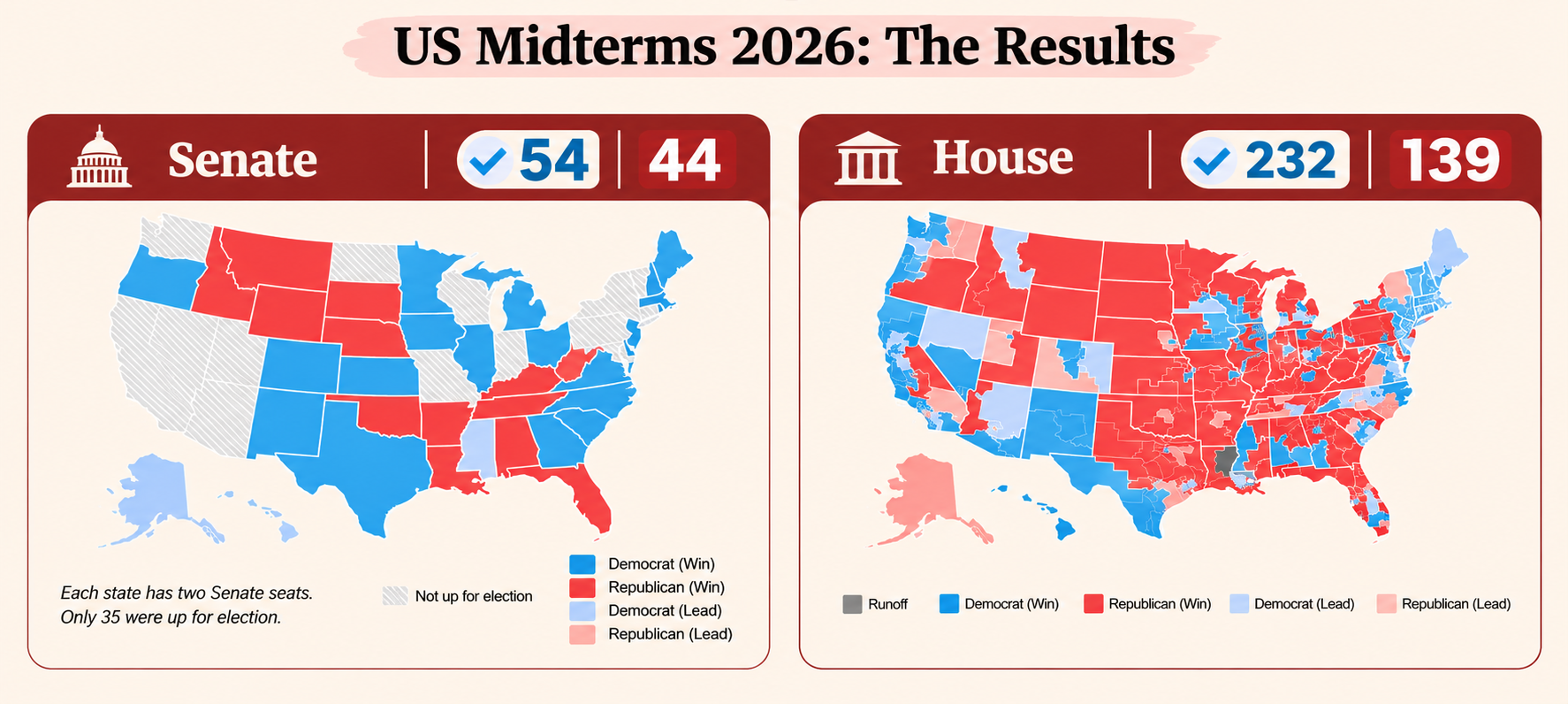
Democrats have won control of both chambers of the US Congress following a major defeat for President Donald Trump’s Republican Party. The result could reshape American trade, energy and technology policy.
📝 Here's all you need to know:
- What are the midterms? US elections held halfway through a president’s four-year term. Voters elect all 435 members of the House of Representatives and around one-third of the Senate.
- What happened? Democrats won control of both the House and Senate, ending Republican control of Congress following widespread voter frustration over living costs, tariffs and the economy.
- Why does this matter? Trump remains president, but Democrats can now block major legislation, influence government spending and investigate his administration. This makes it harder for him to deliver his economic agenda.
📊 The Key Trend
Businesses value stability when planning investments. With Democrats controlling Congress, major changes to taxes and spending may become less likely, potentially reassuring investors. If government borrowing falls, this could also help lower borrowing costs for businesses.
However, political disagreements could delay decisions or trigger government shutdowns. Trump also retains significant powers over trade and foreign policy, meaning uncertainty remains.
💸 What does this mean for Businesses?
- Technology companies: Greater scrutiny of the AI boom. Democratic control of Congress could increase investigations into AI competition, data privacy and infrastructure development. Data-centre operators also face growing concerns about electricity prices and water consumption, particularly following Democratic gubernatorial victories in Texas and Georgia. Restrictions could delay projects and increase costs, although comprehensive federal AI legislation remains difficult to pass.
- Investors and financial markets: Politics versus profitability. Divided government could constrain spending and ease pressure on Treasury yields, potentially reducing financing costs for businesses. However, US fiscal deficits remain substantial, and government funding disputes could create volatility. For investors, company earnings, valuations and interest rates may ultimately matter more than the election result itself.
- Energy and international businesses: Competing priorities. Renewable energy companies could benefit from greater congressional support for clean technology, while traditional oil and gas producers may face increased scrutiny. Meanwhile, businesses exposed to Trump’s tariffs must manage continuing trade uncertainty. Democrats may challenge protectionist policies, but changes to existing tariffs are far from guaranteed, particularly where restrictions on China attract bipartisan support.
⚖️ How does this impact Law Firms?
Join ZipLaw+ to continue reading