
🍫 Why is Chocolate so expensive?
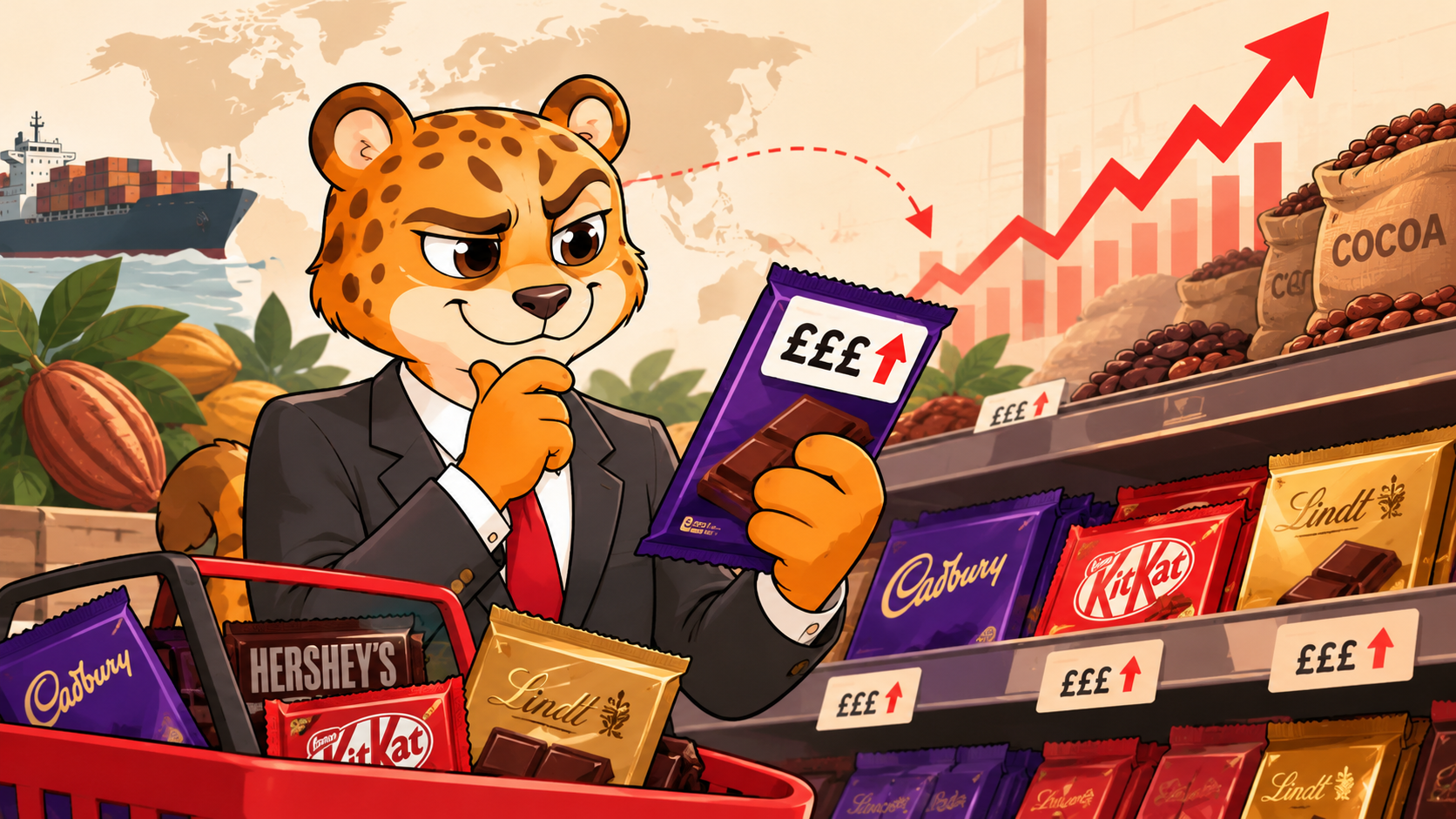
👋 Happy Monday, ZipLawyer! Did you know economists use McDonald's Big Macs to measure the value of currencies? 🍔 In 1986, The Economist created the Big Mac Index, which compares the price of the same burger across countries to see whether currencies are overvalued or undervalued. It's become a surprisingly useful way to understand exchange rates.
🐯 NEWS BRIEFING

🇫🇷 France is losing its cool: France's cost-of-living crisis has spilled onto the streets — and into flames. Around 550,000 people joined nationwide protests on Saturday, with more than 1,800 arrests after clashes, looting and arson. In Limoges, a fire gutted the historic town hall, collapsing its roof and spire. Student frustration over education standards has merged with anger over rising living costs, creating another political headache for President Emmanuel Macron ahead of France's 2027 presidential election.
🇺🇦 Ukraine's intelligence lifeline is back on: President Volodymyr Zelensky says America has resumed sharing crucial military intelligence following a temporary pause, although Washington denies cutting off support. The intelligence helps Ukraine detect incoming Russian missiles, making it key to keeping cities safe. Zelensky is also pursuing fresh peace talks with US officials, even as tensions between Kyiv and Washington grow.
🛡️ Egypt offers Saudi Arabia backup: Egypt has offered to help defend Saudi Arabia as attacks by Yemen's Iran-backed Houthi rebels intensify. The militants have targeted Riyadh's international airport and Saudi energy facilities, prompting President Abdel Fattah al-Sisi to pledge whatever support is necessary if requested. The potential involvement of another major regional military power raises the stakes considerably, particularly for investors watching Middle Eastern oil supplies and the risk of a wider conflict.
🗳️ Trump backs Bibi, but will voters? Donald Trump has thrown his weight behind Israeli Prime Minister Benjamin Netanyahu ahead of the country's October 27 election, praising his leadership during the war with Iran. The endorsement comes after months of disagreements between the two allies over regional strategy. Netanyahu's right-wing coalition is currently projected to fall short of the 61 parliamentary seats needed for a majority.
👀 To discuss in interviews
The Global Chocolate Crunch
In short
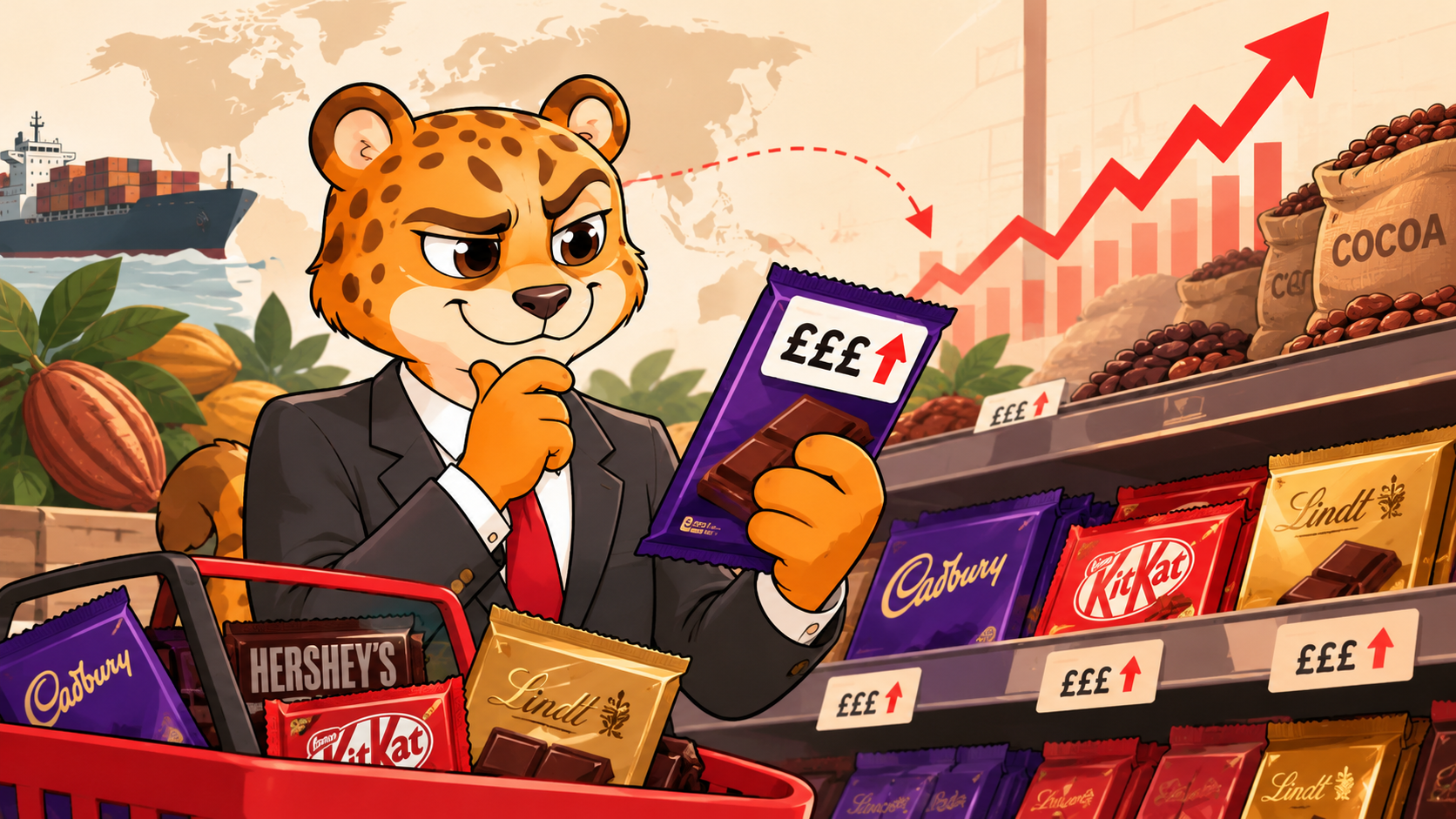
Wild swings in cocoa prices are putting chocolate manufacturers around the world under pressure, from Britain's Cadbury to Switzerland's Lindt and America's Hershey. With supply disruptions threatening future harvests, businesses face difficult decisions over pricing, ingredients and how to protect their profits.
What's going on?
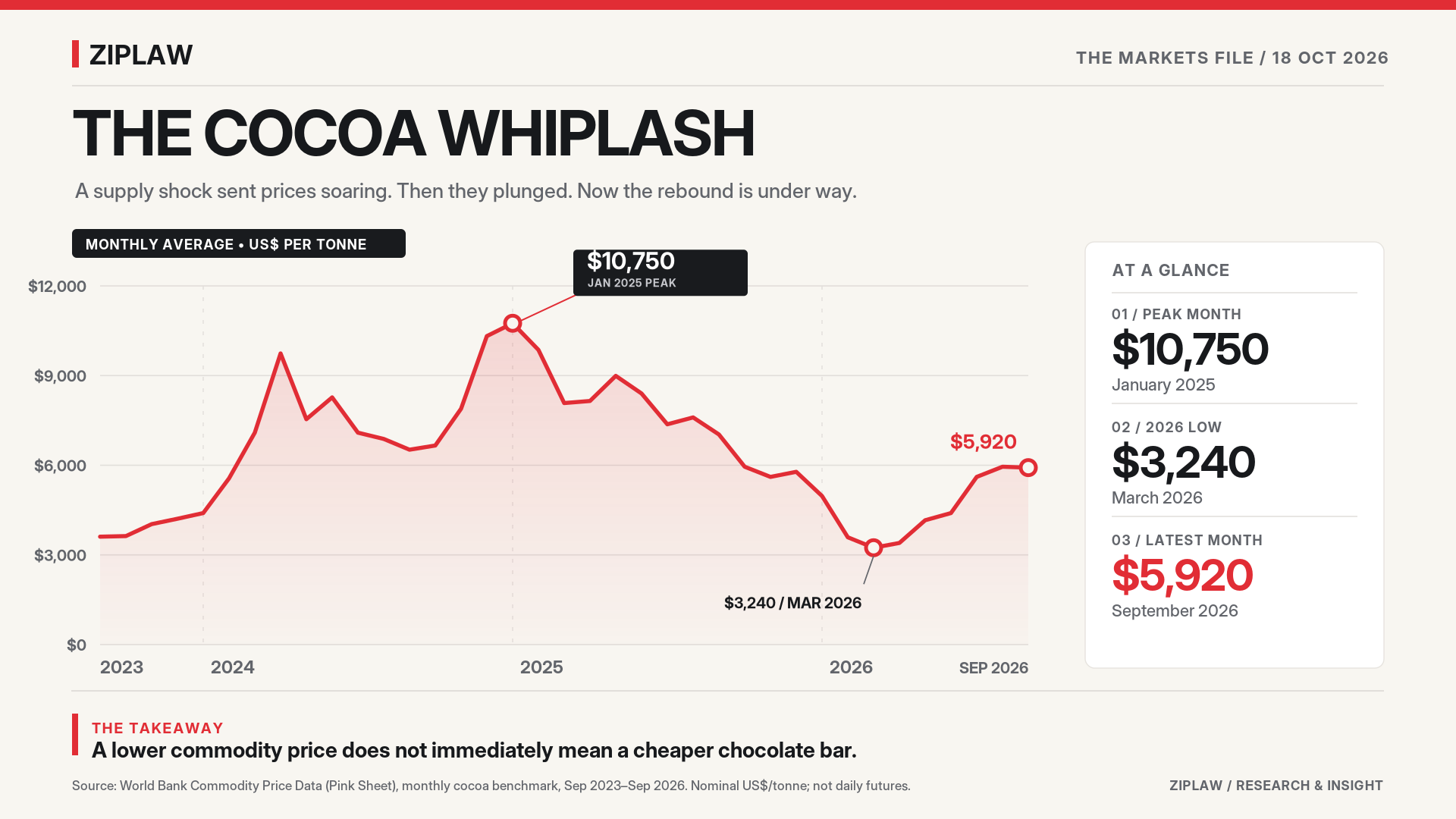
- Cocoa prices have been on a rollercoaster. Bad weather and crop diseases in Ghana and Côte d'Ivoire, which produce 60% of the world's cocoa, pushed prices to $12,565 per tonne in December 2024. Prices later collapsed before rebounding to around $5,645 in October 2026.
- Chocolate is getting more expensive. US Halloween chocolate prices have reportedly risen 15.5% year-on-year. British shoppers have also faced higher prices and smaller products, although UK chocolate prices fell 3% in early October following earlier increases.
- Manufacturers are changing strategy. Lindt raised prices by 11.8% in the first half of 2026, while sales volume and mix fell 7.5%. Meanwhile, Hershey has experimented with cheaper ingredients and expanded into salty snacks to reduce its reliance on chocolate.
- Supply concerns are returning. Ghana expects cocoa production to fall 13% in 2026-27, while Côte d'Ivoire also faces weaker harvest forecasts. Meanwhile, stronger demand in Europe and Asia could put further pressure on prices.
Why does this matter?
- Higher prices don't always mean higher profits. Manufacturers must choose between passing rising costs onto customers or accepting lower profit margins. Raise prices too much, and shoppers may switch to cheaper alternatives, as Lindt's falling sales volumes illustrate.
- Supermarkets could gain bargaining power. Retailers like Tesco and Walmart can promote cheaper own-label chocolate and pressure suppliers to keep prices competitive. That could force manufacturers, particularly smaller brands, to absorb more of their rising costs.
- Planning ahead is getting harder. Manufacturers often buy cocoa months in advance, meaning falling commodity prices don't immediately translate into lower costs. Meanwhile, reduced earnings for cocoa farmers could weaken future harvests, creating further supply uncertainty.
How does this impact Law Firms?
Join ZipLaw+ to continue reading